The Uncomfortable Truth About Anti-Aging Skincare
The global anti-aging skincare market generates over $60 billion annually. A meaningful portion of that revenue comes from products that do not, under rigorous scientific scrutiny, produce measurable changes in the visible aging of skin. Not because the companies making them are dishonest — many are not — but because the regulatory framework for cosmetics allows efficacy claims that would not survive clinical trial scrutiny, and because the gap between what sounds scientifically plausible and what is demonstrably effective is enormous in this category.
CeraVe Moisturizing Cream
A simple, trusted everyday moisturizer pick for barrier support and dry skin routines.
Check priceThis guide is going to be direct about that gap. We will identify the ingredients with genuine evidence — the ones where independent, peer-reviewed, placebo-controlled research shows measurable changes in skin structure and appearance. We will be equally direct about the ingredients that sound compelling but lack sufficient evidence to justify their premium pricing. And we will explain exactly what the best products in this ranking actually do to your skin — not what the marketing says they do.
The honest starting point: there is no topical product that reverses significant skin aging. The changes that occur in the dermis over decades — collagen cross-linking, elastin fragmentation, glycosaminoglycan depletion, progressive sebaceous gland atrophy — are not reversed by applying a cream. What the best anti-aging products can genuinely do is meaningful but more modest: slow the visible progression of these changes, improve skin quality and resilience, reduce the appearance (not the underlying cause) of existing lines and loss of firmness, and protect against further UV-driven damage. That is a worthwhile set of outcomes — worth pursuing and worth spending money on. It is also importantly different from what most anti-aging marketing implies.
What Actually Causes Skin to Age
Skin aging has two distinct drivers that require different approaches:
Intrinsic Aging (Chronological)
The biological clock. Fibroblasts — the cells responsible for producing collagen, elastin and hyaluronic acid in the dermis — become progressively less active with age. Collagen production peaks in the mid-twenties and declines at approximately 1% per year thereafter. Elastin loses its ability to recoil fully. The dermis thins. Subcutaneous fat redistributes and diminishes. Bone remodels and resorbs, reducing the structural support beneath the skin. The epidermis renews more slowly — the cell turnover cycle that takes 28 days at age 20 takes 45-60 days at age 50, meaning dull, accumulated surface cells sit longer before being shed.
Intrinsic aging is modifiable by topical treatment to a meaningful but limited degree. Retinoids and peptides can partially offset fibroblast decline; antioxidants can slow certain oxidative processes. The structural changes — bone resorption, fat redistribution — are not addressable topically.
Extrinsic Aging (Photoaging)
UV-driven aging, primarily from UVA radiation, accounts for an estimated 80% of visible facial aging. UVA penetrates into the dermis and directly damages collagen through two mechanisms: it activates matrix metalloproteinases (MMPs) — enzymes that break down collagen and elastin — and it generates reactive oxygen species (free radicals) that damage DNA, lipids and proteins in skin cells. The cumulative effect over decades is the hyperpigmentation, coarse texture, deep wrinkles and loss of elasticity that distinguish a photoaged face from a chronologically aged one.
Photoaging is both preventable (through consistent daily SPF) and partially reversible with retinoids, which downregulate MMP activity and stimulate new collagen synthesis in photodamaged dermis. This is why retinoids show more dramatic visible results on photoaged skin than on intrinsically aged skin — there’s more reversible damage to work with.
The Ingredients With Genuine Evidence
Retinoids (Retinol, Adapalene, Tretinoin)
The most evidence-backed anti-aging ingredient category available. Retinoids bind to nuclear receptors in skin cells and directly regulate gene expression — upregulating collagen production, downregulating MMP activity, accelerating cell turnover, and improving the structural organization of the dermis. The evidence for tretinoin (prescription-strength retinoic acid) spans decades and multiple independent clinical trials. Retinol, the OTC form, converts to retinoic acid in the skin more slowly — producing comparable effects over a longer timeframe with less irritation. Studies comparing retinol 0.1% to tretinoin 0.025% over 24 weeks show clinically comparable improvements in fine line depth, skin texture and pigmentation, with retinol showing better tolerability throughout.
Start low (0.025-0.1%), apply at night, introduce gradually, always follow with morning SPF. The purging and adjustment period is real and worth persisting through.
Vitamin C (L-Ascorbic Acid)
The most important morning anti-aging ingredient. Vitamin C has two anti-aging mechanisms: it neutralizes UV-generated free radicals that would otherwise activate MMP enzymes and damage collagen (antioxidant mechanism), and it is a necessary cofactor for collagen synthesis — without adequate vitamin C, fibroblasts cannot produce functional collagen (pro-collagen mechanism). Multiple clinical studies show measurable improvement in fine lines, skin firmness and pigmentation with consistent use of well-formulated vitamin C serums over 12-24 weeks. The “well-formulated” qualifier is critical — L-ascorbic acid destabilizes rapidly, and many vitamin C products contain negligible active by the time they’re used.
Peptides
Short chains of amino acids that act as cellular signal molecules. The most clinically studied for anti-aging include Matrixyl (palmitoyl pentapeptide-4) and Matrixyl 3000 (a combination of palmitoyl tripeptide-1 and palmitoyl tetrapeptide-7), which signal fibroblasts to upregulate collagen and elastin production. Multiple independent studies — not just manufacturer-funded trials — show measurable wrinkle depth reduction with Matrixyl formulations over 2-3 months. Argireline (acetyl hexapeptide-3) inhibits neurotransmitter release in facial muscles at the application site, producing a mild relaxing effect on expression lines. The evidence for peptides is genuinely good — not as robust as retinoids, but well beyond the evidence for most “innovative” anti-aging actives launched in recent years.
Niacinamide (Vitamin B3)
At concentrations of 4-5%, niacinamide has demonstrated anti-aging effects: it stimulates collagen and keratin production, improves skin elasticity, reduces the appearance of hyperpigmentation and age spots, and reinforces the barrier function that declines with age. It’s also anti-inflammatory, which is particularly valuable because chronic low-grade inflammation — “inflammaging” — is increasingly recognized as a driver of skin aging beyond UV damage. Exceptional tolerability makes it appropriate even for those who can’t use retinoids.
AHAs (Glycolic and Lactic Acid)
Alpha-hydroxy acids accelerate epidermal cell turnover by dissolving the bonds between surface dead cells, revealing newer, more luminous skin beneath. At concentrations above 10%, glycolic acid has additionally demonstrated the ability to stimulate fibroblast activity and increase dermal thickness — a genuine structural effect rather than just surface exfoliation. Regular use improves skin texture, reduces the appearance of fine lines, and improves the absorption of other actives by removing the accumulated surface cell layer that can block penetration. Use at night, always follow with morning SPF.
Sunscreen
Listed here deliberately because it is the most evidence-backed anti-aging intervention available. Prevention is more effective than treatment for photoaging — the collagen destroyed by UV today cannot be fully restored by any topical product. A landmark Australian study demonstrated zero measurable increase in skin aging over 4+ years of daily sunscreen use versus controls. No anti-aging product in this ranking produces outcomes comparable to consistent, correctly applied SPF 30+. If you use one anti-aging product, make it this.
Ingredients That Sound Impressive But Lack Strong Evidence
Honest anti-aging advice requires naming the ingredients that are heavily marketed but not well-supported by independent research:
Stem cells (plant or human-derived): Plant stem cells applied topically cannot communicate with human skin cells — the biological machinery is fundamentally incompatible. “Human stem cell conditioned media” in concentrations typically used in cosmetics has not demonstrated meaningful clinical efficacy in independent trials. The concept sounds compelling; the evidence doesn’t support the marketing.
Collagen in face creams: Topically applied collagen molecules are too large to penetrate the dermis, where collagen structure exists. Collagen in a moisturizer functions as a humectant and film-former — useful properties, but not structural collagen replacement. Collagen peptides (hydrolyzed collagen) are smaller and may have some evidence when ingested; topically, the evidence remains limited.
Growth factors: EGF (epidermal growth factor) and similar molecules have theoretical mechanisms for fibroblast stimulation but face the same fundamental challenge: large molecules penetrating intact skin in concentrations sufficient for biological activity. Some evidence exists for physician-grade formulations used post-procedure when the barrier is temporarily compromised. Standard cosmetic concentrations on intact skin have limited independent evidence.
Most “proprietary complexes”: Any ingredient described primarily by a trademarked name without disclosed actives and concentrations should be viewed with skepticism. The most effective anti-aging ingredients are well-characterized molecules with published research — not exclusive formulations whose mechanism relies on marketing language.
The Complete Anti-Aging Routine — What to Use and When
Morning (Protection Priority)
Your morning routine’s job is photoprotection and antioxidant support. Vitamin C serum on clean skin — wait 60 seconds — moisturizer — SPF 30+. This sequence, applied every morning without exception, is the most evidence-backed anti-aging protocol available without a prescription. Everything else in a morning routine is supplementary.
Evening (Repair Priority)
Your evening routine’s job is cellular repair and structural support. A gentle cleanser — retinol or retinoid (every other night initially, building to nightly) — wait 20-30 minutes — a peptide-rich moisturizer or a ceramide moisturizer. For very dry or mature skin, add a facial oil or thin layer of petrolatum as the final step (skin flooding technique). AHA exfoliants go on alternate evenings to retinol — not the same night.
What Not to Do
Use vitamin C and retinol in the same session — the pH mismatch reduces both their efficacy. Use AHAs the same night as retinol — the combined exfoliation exceeds what most skin can manage without significant barrier disruption. Apply SPF at night — it serves no protective function and adds unnecessary ingredient exposure. Layer five or more actives simultaneously — you can’t tell what’s working, reactions become difficult to attribute, and penetration of each individual active decreases.
The Rankings — 7 Best Anti-Aging Products of 2026
Ranked by quality and independence of supporting evidence, real-world results, value, and appropriateness for different starting points. Full position reasoning follows.

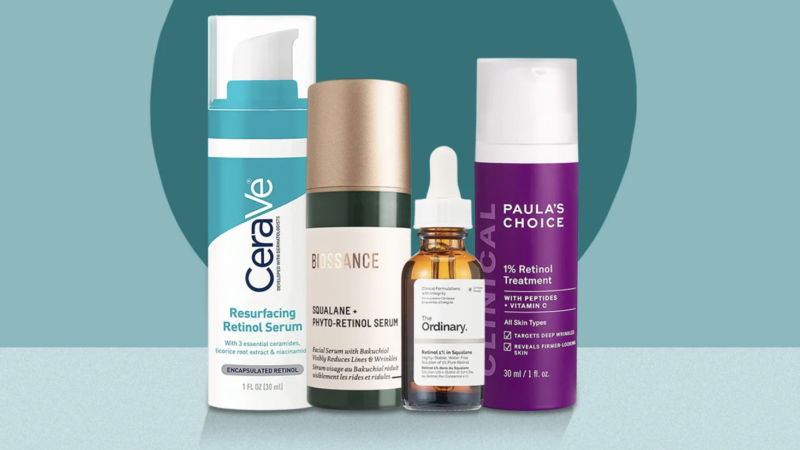
The Ordinary Retinol 0.2% in Squalane
~$8 · 30ml · 0.2% Retinol · Squalane base · Fragrance-free

TruSkin Vitamin C Serum
~$20 · 1 fl oz · 20% Vitamin C + Vitamin E + HA · Fragrance-free

Neutrogena Rapid Wrinkle Repair Retinol Serum
~$22 · 1 fl oz · Accelerated Retinol SA · Measurable results at 4 weeks

SkinCeuticals C E Ferulic
~$182 · 1 fl oz · 15% Vitamin C + Vitamin E + Ferulic Acid · Peer-reviewed

Paula’s Choice 0.3% Retinol + 2% Bakuchiol
~$52 · 30ml · Retinol + Bakuchiol · Sensitive skin · Fragrance-free

The Ordinary Multi-Peptide + HA Serum
~$28 · 30ml · Matrixyl 3000 + Argireline + HA · All skin types

EltaMD UV Clear SPF 46
~$39 · 1.7 fl oz · Broad-spectrum SPF · Niacinamide · Prevention over treatment
Why Each Product Ranked Where It Did
🥇 #1 — The Ordinary Retinol 0.2% in Squalane
The Ordinary Retinol 0.2% earns the top position by making the most evidence-backed anti-aging active accessible to virtually everyone — at $8 for 30ml, there is no price barrier. The 0.2% concentration is genuinely effective for anti-aging while being low enough for most beginners to tolerate with a proper introduction protocol, and the squalane base — a skin-identical lipid that conditions the barrier — dramatically reduces the irritation and dryness that makes so many people abandon their retinol routine before seeing results.
It tops the ranking not because it produces the fastest results (Neutrogena’s Accelerated Retinol SA at #3 does that) or because it’s the most sophisticated formulation (Paula’s Choice at #5 is better formulated). It tops the ranking because retinol is the foundation of any serious anti-aging routine and this product removes every barrier to starting one. The cost-per-week of use — under $0.15 — means the financial argument for not using a retinoid evaporates. Start here. Stay here for three months. Then upgrade if you want to.
🥈 #2 — TruSkin Vitamin C Serum
Vitamin C belongs in the second position because morning antioxidant protection is the second pillar of an evidence-based anti-aging routine after a retinoid. TruSkin’s 20% L-ascorbic acid formula earns this position for exactly the same reasons it tops the serum ranking: stable, effective, accessible, and consistently performing in real-world use. The combination of vitamin C and SPF (applied in sequence each morning) provides photoprotective synergy that neither product achieves alone — multiple studies confirm that the antioxidant-SPF combination doubles UV protection compared to SPF alone.
For those who find 20% too stimulating, CeraVe Vitamin C Serum at 10% is a gentler starting point — particularly for aging skin that is also sensitive or dry, where barrier support during active treatment is important.
🥉 #3 — Neutrogena Rapid Wrinkle Repair Retinol Serum
Neutrogena Rapid Wrinkle Repair is specifically designed for people who have already built a retinol base and want to see faster results than a 0.2% squalane formula produces. The Accelerated Retinol SA technology stabilizes retinol with glucose complex and accelerates its conversion to retinoic acid — delivering faster visible improvements (measurable wrinkle depth reduction at 4 weeks in clinical testing) than standard retinol at equivalent concentrations. It earns third rather than first because it contains fragrance (a concern for sensitive skin) and because its faster activity comes with commensurately more potential for irritation — making it inappropriate as a starting point for retinol beginners.
The practical recommendation: start with The Ordinary 0.2% for three months. If tolerance is established and results have plateaued, transition to Neutrogena Rapid Wrinkle Repair for the next phase of treatment.
✨ #4 — SkinCeuticals C E Ferulic
SkinCeuticals C E Ferulic is the only product in this ranking where the clinical evidence comes from truly independent, peer-reviewed research rather than manufacturer-funded studies alone. The specific combination of 15% L-ascorbic acid, 1% vitamin E and 0.5% ferulic acid at this precise ratio was developed through academic research at Duke University and has been validated in multiple subsequent independent trials. Ferulic acid stabilizes both vitamin C and vitamin E while amplifying their combined photoprotective effect — studies confirm double the UV protection of SPF when applied beneath sunscreen.
It ranks fourth rather than higher not because the evidence is weak — it’s the strongest in this ranking — but because $182 for 1oz places it outside the practical budget of most people reading this, and because TruSkin at $20 delivers 80-85% of the same functional benefit. The ranking reflects value alongside evidence. For those with the budget and a commitment to optimal antioxidant protection, this is the best morning anti-aging product available without a prescription.
🌿 #5 — Paula’s Choice 0.3% Retinol + 2% Bakuchiol
This product earns its fifth position by solving the most common reason people abandon retinol: irritation. The 0.3% retinol concentration is meaningfully higher than beginner formulas — delivering faster, more visible results — while the 2% bakuchiol addition activates complementary collagen-stimulating pathways and appears to moderate the irritation response without reducing retinol’s efficacy. The formula is entirely fragrance-free and developed with the brand’s characteristic evidence-based philosophy. For mature skin that has tried retinol before and found irritation was the limiting factor, or for aging skin that is also sensitive, this formulation represents the best balance of efficacy and tolerability at the 0.3% retinol level.
It ranks fifth rather than higher because the $52 price point is a meaningful premium over The Ordinary’s 0.2% formula, and because the bakuchiol addition — while genuinely supported by emerging research — adds cost without yet having the independent evidence base that retinol alone carries. For its specific target user, though, it may be the most practically effective product in this entire ranking.
💧 #6 — The Ordinary Multi-Peptide + HA Serum
The Ordinary’s peptide serum earns sixth position by providing the best-value access to the peptide approach to anti-aging — Matrixyl 3000 (palmitoyl tripeptide-1 + palmitoyl tetrapeptide-7, the most clinically studied collagen-stimulating peptide combination) and Argireline (the expression-line relaxing peptide), alongside hyaluronic acid for hydration. At $28 for 30ml, it delivers the ingredient stack that drives most of the efficacy in peptide products costing four to six times as much.
Peptides rank sixth rather than higher in this anti-aging ranking because their evidence base, while genuinely good, is not as robust as retinoids and vitamin C. They work through a different mechanism — signaling rather than directly modifying gene expression — and their results, while real, tend to be more subtle and take longer to become visible. Their significant advantage: zero irritation risk, morning or evening use, appropriate for anyone including those who cannot tolerate retinoids. For people whose skin won’t accept retinol, this serum alongside vitamin C and SPF is the best evidence-supported alternative available.
☀️ #7 — EltaMD UV Clear SPF 46
EltaMD UV Clear is placed last in this anti-aging ranking deliberately — not because it’s least effective, but because it is the most important and most underestimated anti-aging intervention. The study is worth repeating: consistent daily sunscreen use over 4+ years produced zero measurable increase in visible aging in a landmark randomized controlled trial. No retinoid, no vitamin C, no peptide, no product in this ranking produces outcomes comparable to what consistent SPF prevents.
EltaMD UV Clear earns its place here specifically because its niacinamide content adds active anti-aging benefit beyond UV protection — reducing inflammation, reinforcing the barrier, and addressing sebum-driven skin changes. It’s the product you should already own before you purchase any of the others in this ranking. The anti-aging routine that starts with SPF and adds retinol is more effective than the anti-aging routine that starts with retinol and skips SPF.
At What Age Should You Start Anti-Aging Skincare?
The most useful answer: earlier than you think, and more modestly than the industry implies.
Early twenties: The anti-aging intervention with the highest long-term return is SPF, started now. Vitamin C in the morning adds meaningful photoprotection synergy. These two habits, maintained consistently from your early twenties, will produce more visible skin quality difference by age 40 than any treatment started at 35.
Mid to late twenties: Retinol (0.025-0.1%) introduced gradually. Collagen production has begun its 1% annual decline. Retinol’s collagen-stimulating effect is most efficient when there is still a healthy collagen framework to build from. Starting preventively in the late twenties or early thirties is genuinely more effective than starting at 45 when more ground has been lost.
Thirties: Increase retinol concentration as tolerance allows. Consider adding a peptide serum to your evening routine. Address specific concerns — hyperpigmentation, loss of radiance, first visible fine lines — with targeted actives. This is when the foundation laid in your twenties begins to compound visibly.
Forties and beyond: Rich emollient moisturizers become more important as sebaceous function declines. Barrier support is as important as active treatment. Retinol remains the cornerstone but may need a more buffered, lower-concentration approach as skin becomes more sensitive. Consider professional treatments — laser resurfacing, radiofrequency, neuromodulators — as complements to topical routines for concerns that topicals alone can’t fully address.
Frequently Asked Questions
Can anti-aging products really reverse wrinkles?
Partially, in specific circumstances. Fine lines caused primarily by dehydration and surface dryness respond well to consistent moisturization. Fine lines in photodamaged skin — where UV-driven collagen degradation has occurred — show measurable improvement with retinoids, which stimulate new collagen synthesis and downregulate the enzymes that break it down. Deep expression lines and structural changes from volume loss and bone resorption are not meaningfully reversible with topical products. Clinical procedures address what topicals cannot.
Do I need separate anti-aging products or can I just use good skincare?
“Good skincare” that includes a retinoid, vitamin C, SPF, and a ceramide moisturizer IS anti-aging skincare. You don’t need a product labeled “anti-aging” — you need the right ingredients, used consistently. The label is marketing; the ingredient list is what matters.
Is it too late to start anti-aging skincare?
No. Retinoids show measurable results in studies on subjects in their 60s and 70s. Vitamin C provides antioxidant protection regardless of age. SPF prevents further photoaging from this point forward regardless of cumulative past exposure. Starting at any age produces real benefit — the earlier, the more prevention is possible alongside repair.
What about anti-aging supplements — collagen, vitamin C, resveratrol?
Oral collagen peptides have emerging evidence for skin hydration and elasticity improvement — several randomized controlled trials show modest but measurable effects at 2.5-10g daily over 8-12 weeks. Oral vitamin C supports endogenous collagen synthesis. Resveratrol has compelling theoretical mechanisms but limited clinical evidence in humans at oral doses achievable without supplementation. These supplements can support a topical routine but don’t replace it.
The Summary
The most effective anti-aging routine is simpler than the industry wants you to believe. Morning: vitamin C serum, moisturizer, SPF. Evening: retinoid, moisturizer. Consistently. For years. That is it. Every other product is supplementary.
Start with The Ordinary Retinol 0.2% at night and TruSkin Vitamin C in the morning, both used beneath a broad-spectrum SPF 30+. These three products — totaling under $50 — represent the most evidence-supported anti-aging routine available at any price point. Everything else in this ranking is an upgrade, not a replacement.
The most expensive mistake in anti-aging skincare is buying products that sound impressive instead of products that work. The most important habit in anti-aging skincare is applying SPF every morning. These two sentences, taken seriously, will serve you better than any single product recommendation.
Featured product pick
Compare price, availability and product details before buying.
Este conteúdo pode conter links de afiliados. Podemos receber comissão por compras qualificadas, sem custo extra para você.