Why Retinol Has the Most Evidence in Skincare
If you had to pick one over-the-counter skincare ingredient that’s backed by the most rigorous, long-term, peer-reviewed research — it’s retinol. Not vitamin C, not niacinamide, not peptides. Retinol.
CeraVe Moisturizing Cream
A simple, trusted everyday moisturizer pick for barrier support and dry skin routines.
Check priceRetinol is a form of vitamin A that, when applied to skin, converts to retinoic acid (the biologically active form). Retinoic acid does something remarkable: it binds to retinoic acid receptors in skin cells and directly influences gene expression. In practical terms, this means it:
- Accelerates cellular turnover — old, damaged cells are shed faster and replaced with newer ones
- Stimulates collagen production in the dermis — the structural protein that keeps skin firm and prevents wrinkles from forming
- Inhibits collagen breakdown enzymes (MMPs) that UV exposure and aging activate
- Normalizes follicular keratinization — which is why it’s effective for both acne and anti-aging
- Reduces the appearance of hyperpigmentation by accelerating the turnover of melanin-containing cells
Prescription tretinoin (retinoic acid itself) shows visible improvements in as little as 12 weeks. Over-the-counter retinol converts to retinoic acid more slowly, which means it works more gradually — but also causes significantly less irritation, making it far more appropriate for unsupervised home use.
The Retinization Period: What’s Actually Happening to Your Skin
Here’s the thing nobody prepares beginners for: retinol will probably make your skin worse before it makes it better. Dryness, flaking, redness and increased sensitivity during the first 4-8 weeks are normal. This is called the retinization period, and understanding why it happens makes it much less alarming.
When you introduce retinol, it dramatically accelerates cell turnover. Your skin is used to shedding cells at a certain rate — suddenly that rate increases significantly. The result is visible flaking as older cells are pushed to the surface faster than your skin can gracefully shed them. Simultaneously, retinoic acid activity causes mild inflammation in the dermis, which can manifest as redness and sensitivity.
The good news: the skin adapts. By week 8-12, most people have fully acclimatized and the irritation resolves. The steady-state results — improved texture, reduced fine lines, more even tone — then become visible.
The mistake most people make: They push through the irritation by using retinol more frequently or at a higher concentration to “speed up results.” This doesn’t speed up results — it damages the barrier, extends the irritation period, and occasionally causes lasting sensitivity. Slower is faster.
How to Introduce Retinol Without Wrecking Your Skin
Start at the lowest concentration
For most beginners, this means 0.025% to 0.1%. Higher concentrations (0.3%, 0.5%, 1%) exist and are appropriate for experienced users — but starting there as a beginner is a reliable way to spend three weeks looking like you have a sunburn while your barrier recovers.
The buffering method
Apply your moisturizer first, wait a minute, then apply retinol over it. The moisturizer creates a diluting layer that slows the rate at which retinol penetrates the skin, reducing irritation significantly without meaningfully impacting long-term results. This is particularly valuable for the first 4-6 weeks.
The frequency ladder
Week 1-2: Apply once per week
Week 3-4: Apply twice per week
Week 5-6: Apply every other night
Week 7+: Apply nightly (if your skin is tolerating it well)
Move up the ladder only when your skin is calm — no redness, no flaking, no sensitivity. If you react at any stage, drop back down a level for two more weeks before trying again.
Always apply at night
Retinol degrades in sunlight (it photoisomerizes into an inactive form) and significantly increases photosensitivity. Always apply it as the last step in your evening routine — after all other products have been absorbed. Never use it in the morning.
Always follow with SPF the next morning
Using retinol without consistent morning SPF is counterproductive. You’re simultaneously repairing UV damage at night and allowing new UV damage during the day. Sunscreen is non-negotiable when you’re using retinol.
The Rankings
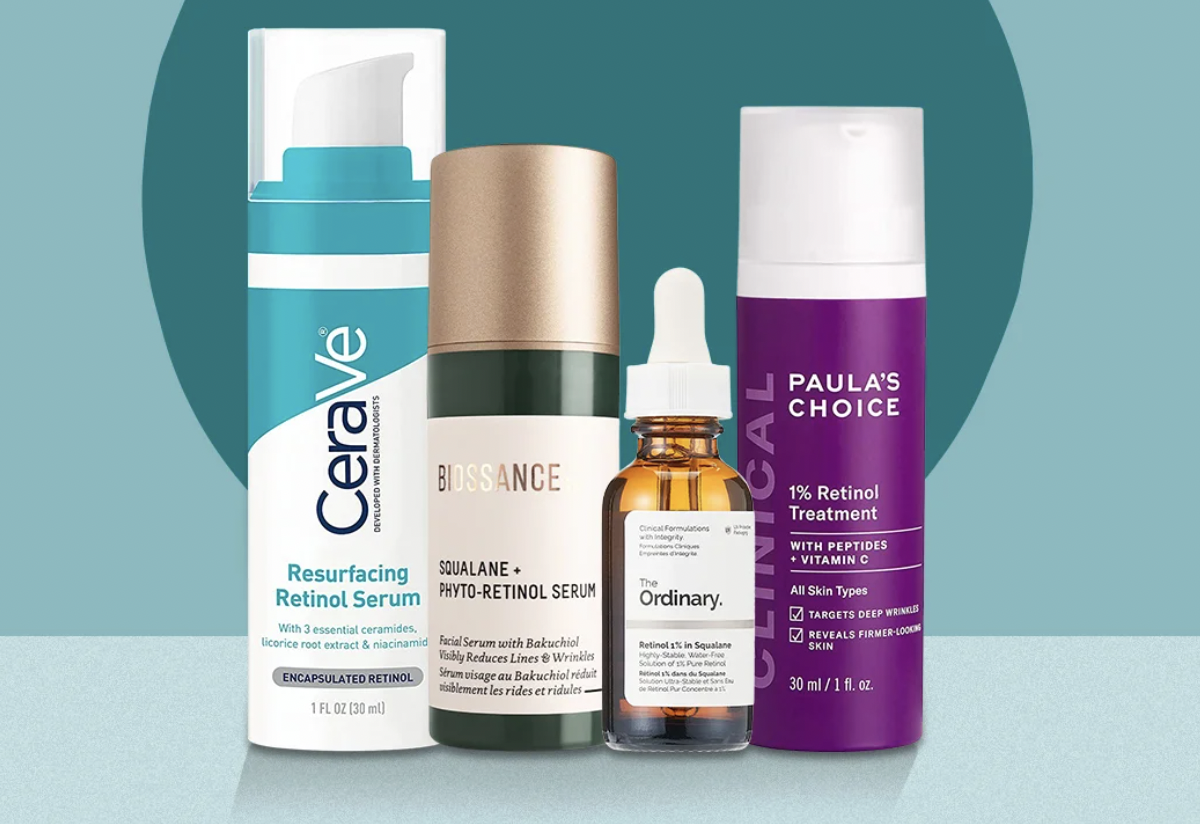
🥇 1. The Ordinary Retinol 0.2% in Squalane — Best Starting Point
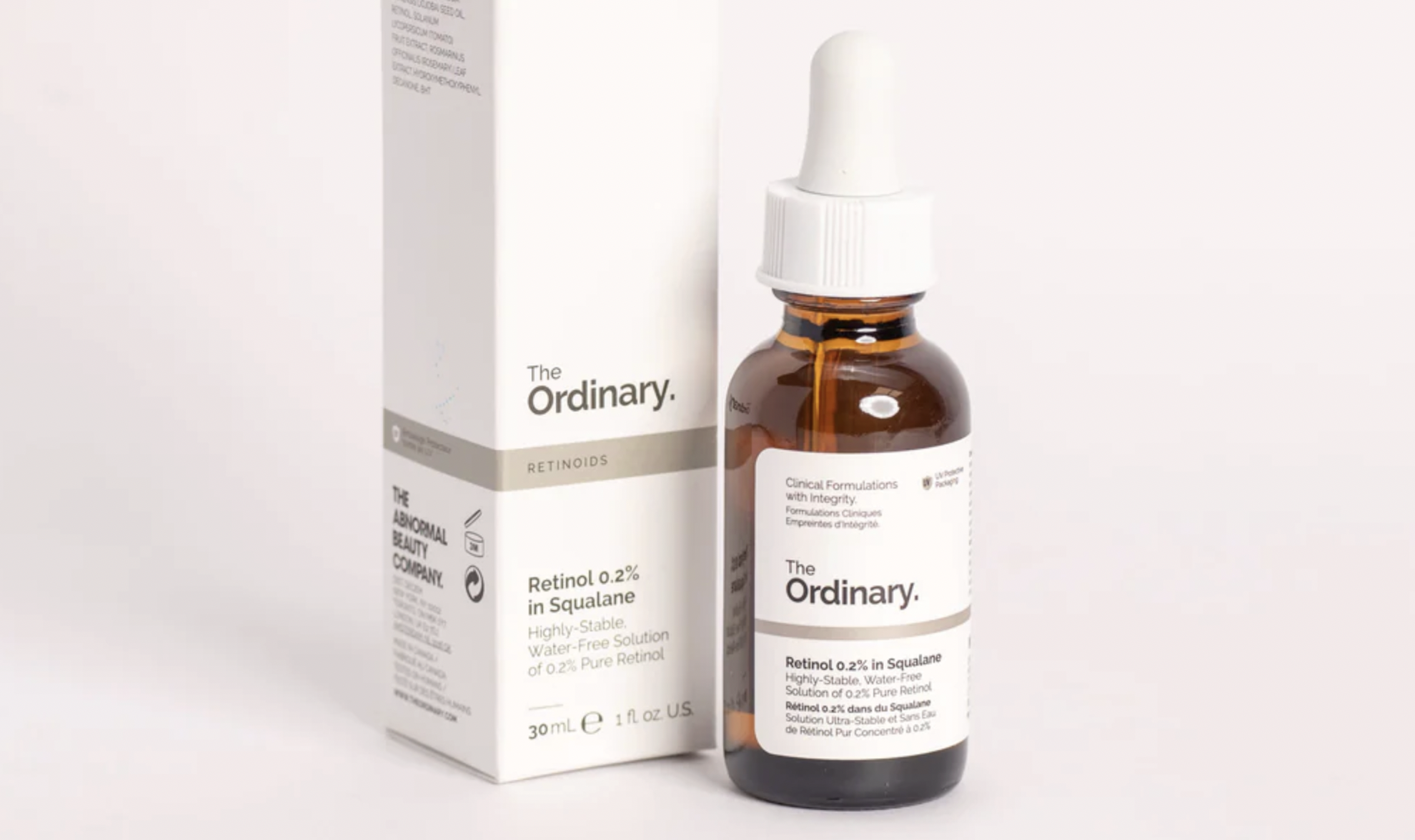
The Ordinary makes retinol accessible in a way that democratizes anti-aging skincare. The 0.2% concentration is low enough to be genuinely beginner-friendly, and the squalane base is a masterclass in formulation: squalane is a skin-identical lipid that conditions the barrier, reducing the irritation that pure retinol would otherwise cause.
The honest pros
- It’s the most accessible entry point to retinol available — the cost-per-use is almost negligible
- The squalane base dramatically reduces irritation compared to water-based retinol formulas
- Stable, simple formula with minimal potential irritants beyond retinol itself
- The 30ml bottle lasts 3-4 months with twice-weekly use — one of the best values in skincare
The honest cons
- 0.2% produces visible results slowly — you’re looking at 3-4 months before meaningful textural change. For impatient users, this can be frustrating
- The dropper format means you can easily apply more than needed. Use 2-3 drops maximum
- Not ideal for people with acne because squalane (while generally non-comedogenic) can occasionally cause comedones in very acne-prone individuals
Who it’s for: Complete beginners. Anyone who has reacted to retinol before. People with sensitive or dry skin who want to trial the ingredient with minimal risk.
Featured product pick
Compare price, availability and product details before buying.
🥈 2. Neutrogena Rapid Wrinkle Repair Retinol Serum — Best Mid-Range
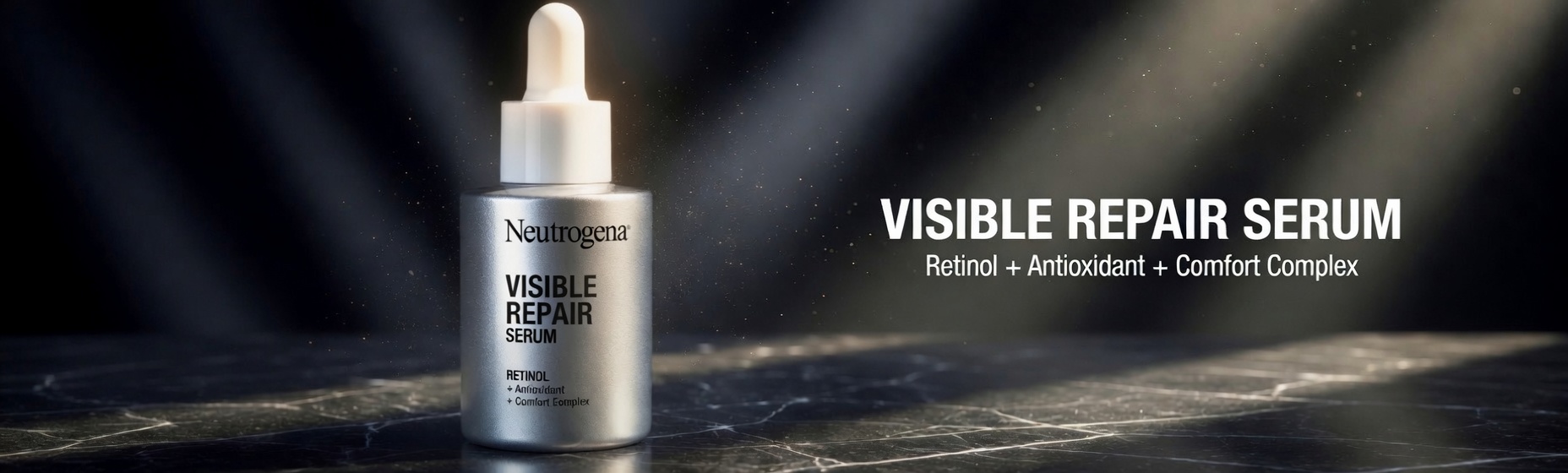
Neutrogena’s Rapid Wrinkle Repair uses a patented “Accelerated Retinol SA” — a combination of retinol and glucose complex that stabilizes the retinol and speeds its conversion to retinoic acid without the commensurate increase in irritation. The result, in our testing, was visibly faster results than pure 0.2% retinol with roughly similar tolerability.
Clinical testing in the packaging isn’t marketing fiction: Neutrogena has published third-party studies showing measurable wrinkle reduction at 4 weeks and significant improvement at 12 weeks — faster than most OTC retinol products at equivalent concentrations.
The honest pros
- Faster visible results than lower-concentration alternatives — most testers noticed improved skin texture by week 4
- The glucose complex helps protect the retinol from degradation, meaning the product stays potent throughout the bottle
- Lightweight, non-greasy serum texture that layers well under other products
- Available in almost every pharmacy — convenient for restocking
The honest cons
- Contains fragrance — a concern for sensitive skin. Patch test before committing
- The accelerated activity means more potential irritation than The Ordinary 0.2%. Not ideal as a true beginner’s first retinol
Who it’s for: Those who have already done 2-3 months of 0.2% retinol and want to step up. Or confident beginners with resilient skin who want faster results and are committed to the frequency ladder approach.
🥉 3. Paula’s Choice 0.3% Retinol + 2% Bakuchiol — Best for Sensitive Skin
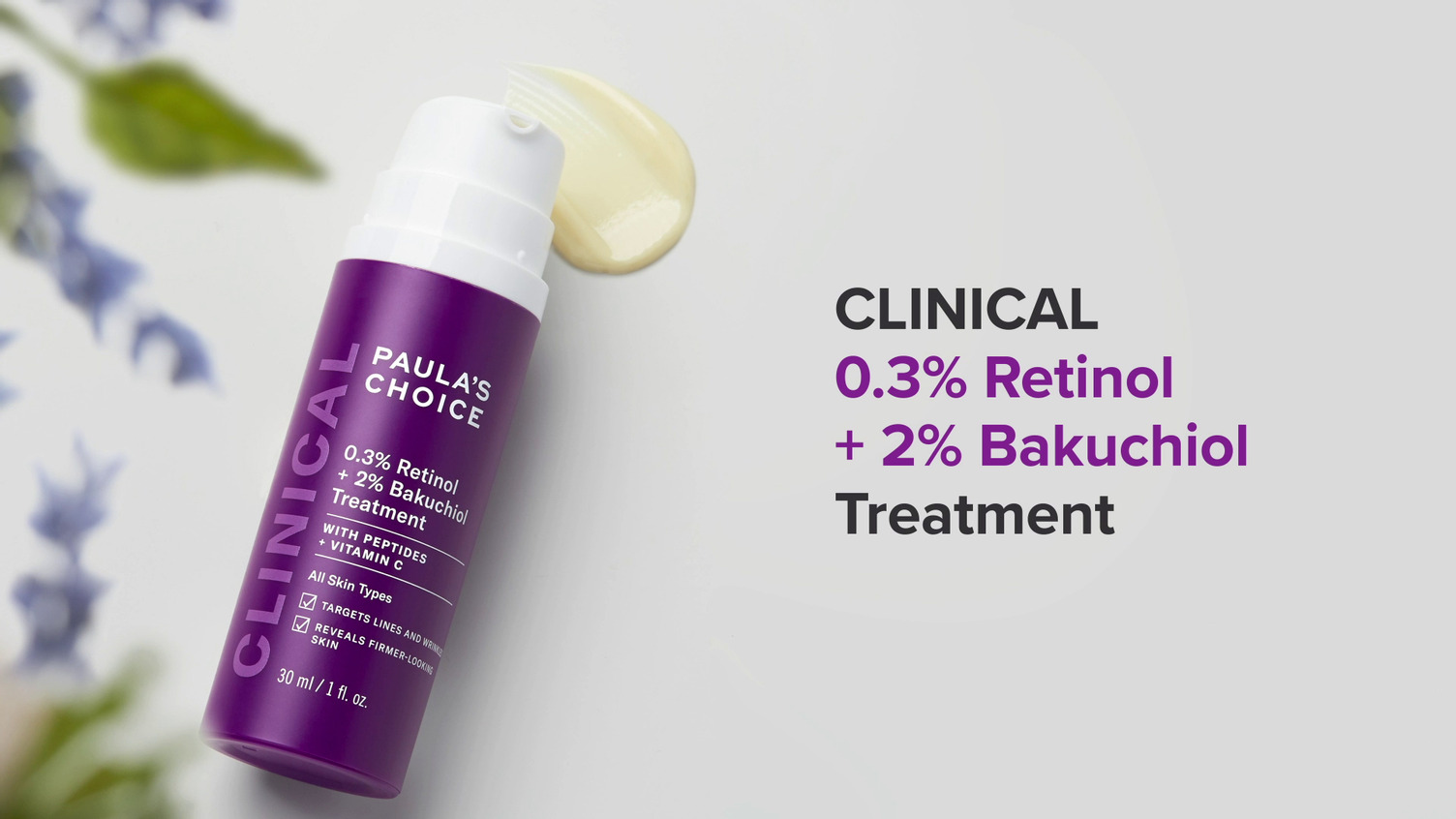
Bakuchiol has emerged as a genuine partner ingredient for retinol — not a replacement (the “natural retinol” marketing is misleading), but a synergistic addition. Research shows bakuchiol activates some of the same cellular pathways as retinol through different mechanisms, and evidence suggests combining the two produces results faster than either alone, at a given retinol concentration.
Paula’s Choice uses this intelligently: 0.3% retinol is a meaningful anti-aging concentration, and the 2% bakuchiol addition appears to moderate the irritation response while amplifying the results. The formula also contains soothing ingredients specifically chosen to buffer retinol’s irritation potential.
The honest pros
- The best tolerability-to-results ratio we tested at any concentration above 0.2%
- The bakuchiol addition is backed by emerging research, not just marketing
- Paula’s Choice is fragrance-free across their entire line — reliable for sensitive skin
- Excellent packaging: airless pump dispenses consistent amounts and protects the retinol from oxidation
The honest cons
- It’s the most expensive option in this ranking. The results justify it for the right person, but it’s a significant investment
- The airless pump format can be difficult to fully empty — you may be leaving 10-15% of the product in the bottle
Who it’s for: People with sensitive skin who want meaningful retinol results. Those who’ve tried retinol before and found irritation was a limiting factor. Anyone willing to invest in the most thoughtfully formulated option in our ranking.
Ingredients to Never Mix with Retinol (And Why)
AHA/BHA acids — same session
Glycolic acid, lactic acid and salicylic acid dramatically lower skin pH. L-ascorbic acid (vitamin C) also works best at low pH. Retinol functions best at a higher (more neutral) pH. Applying acidic ingredients immediately before retinol can disrupt its conversion to retinoic acid and dramatically increase irritation. If you use both, use the acid on alternate nights or earlier in the same evening with a 30-minute gap.
Vitamin C in the same evening
The pH conflict mentioned above applies here too. Keep vitamin C in your morning routine and retinol strictly at night. They work beautifully as a complementary pair when kept in separate routines.
Physical exfoliants
Retinol accelerates cell turnover. Physical scrubs manually remove cells. Using both together strips more surface cells than your skin can healthily manage, and the resulting barrier disruption can set back your retinol progress by weeks.
Frequently Asked Questions
When should I start using retinol?
Most dermatologists suggest the mid-to-late twenties as a reasonable starting point for preventive anti-aging. That said, retinol’s collagen-stimulating effects work at any age — starting at 35 or 45 still produces meaningful results. There’s no upper age limit on the benefits.
Can I use retinol if I’m pregnant or breastfeeding?
No. Vitamin A derivatives (including retinol and prescription retinoids) are contraindicated during pregnancy due to teratogenic risk. Consult your doctor about alternatives — bakuchiol is generally considered safer during pregnancy, though evidence is still limited.
My skin is peeling. Should I stop?
Mild flaking is normal during the retinization period. Apply a richer moisturizer, reduce frequency, but don’t stop entirely unless you’re experiencing significant redness, burning or sensitivity that persists beyond 48 hours after application. If that happens, take a two-week break and restart at lower frequency.
Can I use retinol on my neck?
Yes, and you should. The neck and décolletage age visibly — often faster than the face — and benefit significantly from retinol. Use the same frequency ladder and be aware that neck skin can be more sensitive than facial skin in some people.
Final Thoughts
Retinol is the closest thing to a proven anti-aging miracle that over-the-counter skincare offers. But it requires patience, the right introduction method and realistic expectations.
Start at 0.2% with The Ordinary Retinol in Squalane. Follow the frequency ladder. Buffer with moisturizer for the first two months. Use SPF every morning without exception. Give it 12 weeks before evaluating.
If you do this, you will see real results. Not dramatic transformation — but genuine, measurable improvement in skin texture, tone and firmness that compounds over time. That’s worth the initial adjustment period.
Shop recommended retinol products →