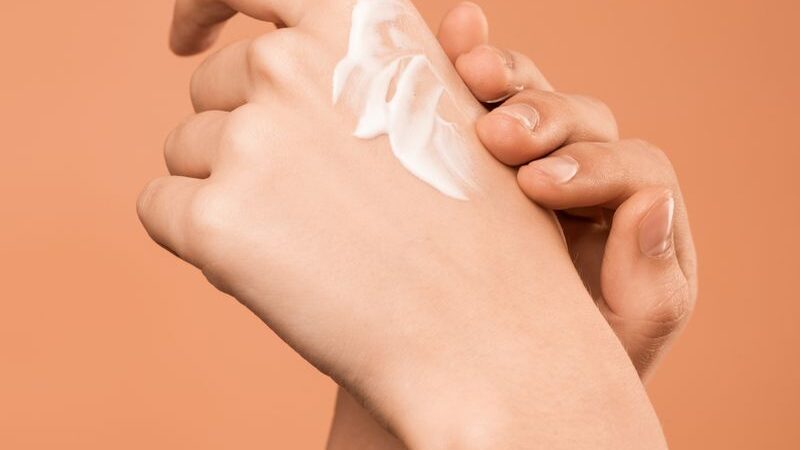
If It Works for Her, It’ll Work for Me
My friend had great skin and a routine to match. I copied it exactly, product for product. It took a few weeks of mild irritation to realize I’d copied the wrong thing.
Beginner Skincare Routine Set
A simple starter routine idea: gentle cleanser, moisturizer and daily SPF.
Check priceWhen I finally decided to start a real skincare routine, I had an obvious reference point sitting right in front of me: a friend whose skin I’d genuinely admired for years, who was happy to walk me through exactly what she used, in what order, every morning and night. It felt like the most efficient possible starting point — instead of researching from scratch, I’d just copy a routine that was demonstrably working, on someone whose skin I could literally compare mine to.
So that’s what I did. I wrote down her entire routine — cleanser, a couple of serums, a retinol product, moisturizer, sunscreen — and bought every single item, in the same order, same frequency. Within about a week and a half, my skin was noticeably more irritated than it had been before I started: some redness, a bit of flaking in patches, a general “sensitive” feeling that hadn’t been there before.
The Detail I’d Skipped Over
My first instinct was to assume one specific product was the culprit — probably the retinol, since that’s the one I’d read the most warnings about. I mentioned this to my friend, expecting her to suggest a different retinol or a different frequency. Instead, she asked how long I’d been using it, and when I said “since I started, like everything else,” she paused and said something like: oh, I’ve been using mine for almost three years — I started with something much weaker and worked up to this over a long time.
I’d copied her current routine — the version she’d arrived at after years of her own adjustments — and treated it as a starting point, as if it had always looked like this. It hadn’t. The retinol she was using now wasn’t the retinol she’d started with; it was the result of a long process I’d skipped entirely by copying the destination.
What I Actually Changed
I kept the overall structure of her routine — the categories of products, roughly the order, the general idea — but went back to gentler versions within each category, especially for anything that counted as an “active” ingredient. Where she used a stronger retinol a few times a week, I started with a much milder one, less often. Where her cleanser was a fairly active exfoliating one, I started with something plain and gentle.
The framing that helped most was thinking of her routine as a map of categories — cleanser, treatment serum, moisturizer, sunscreen — rather than a specific shopping list. The map was genuinely useful; it told me what kinds of things to have in a routine and roughly in what order. The specific strength of each thing was where the copying had gone wrong, and that’s the part that needed to start over, separately for me, regardless of how long it had taken her to get to her current version.
The Products That Actually Earned Their Spot
Same format as the rest of this series — the gentler starting versions, in the same categories as my friend’s routine, rather than the same specific products.
Neutrogena Ultra Gentle Daily Cleanser
My friend’s cleanser had some mild exfoliating properties, which on her skin — after years of use — wasn’t an issue. As a starting cleanser for me, in the same category but a much gentler formula, this filled the same role (the first step, removing the day or night’s buildup) without adding anything extra for my skin to adjust to on top of everything else that was new.
Aveeno Daily Moisturizing Lotion
A straightforward, basic moisturizer — the category my friend’s moisturizer also fell into, but without any of the additional actives hers included (which, again, made sense for skin that had been building tolerance for years). As a starting point, this gave me the “moisturizer” step in the routine’s structure without it doing double duty as an actives delivery system on top of everything else.
The Ordinary Retinol 0.2% in Squalane
This is the lower-strength version in the same category as my friend’s retinol, which was a meaningfully higher concentration. Starting here, at a much lower frequency than she currently uses, meant I was in the same category — “introducing retinol” — without trying to start at the strength she’d arrived at after years. This is also covered from a different angle in an earlier post in this series about introducing retinol slowly; this is the beginner version of that same lesson, applied to a specific copied-routine situation.
What “Same Categories, Different Strengths” Actually Looked Like
Side by side, my actual starting routine and my friend’s current routine look fairly similar in structure — cleanser, treatment step, moisturizer, sunscreen, roughly the same order. The difference is almost entirely in degree: gentler cleanser, lower-concentration treatment, fewer additional actives in the moisturizer. From the outside, or from a quick glance at a list of product categories, the routines might look nearly identical. The actual experience of using them — at least for my skin, at the start — was very different.
This is also, I think, why “what’s your skincare routine?” as a question can be a bit misleading when the answer comes from someone further along than you are. The categories in the answer might be exactly what you need. The specific products are an answer to a slightly different question — “what does someone’s routine look like after years of adjustment” — which isn’t quite the question a beginner is actually asking, even though it sounds like it is.
Two Habits I Had to Unlearn
Treating “it works for someone” as transferable without adjustment
“This routine works, demonstrably, for someone whose skin I can see” felt like about as strong a recommendation as I could ask for — stronger than a stranger’s online review, certainly. What that confidence skipped over was the multi-year process behind the current version, which doesn’t transfer just because the visible result does.
Asking “what do you use” instead of “what did you start with”
These turned out to be very different questions with potentially very different answers, and I’d only asked the first one. My friend’s honest answer to the second question — a much milder routine, built up gradually — would have been a far better starting point for me than her honest answer to the first.
What My Routine Actually Looks Like Now
📋 The Map (Kept)
Cleanser, treatment serum, moisturizer, sunscreen — the same overall categories and order from my friend’s routine, which genuinely was a useful starting structure.
🔁 The Strengths (Restarted)
Gentle cleanser, basic moisturizer, low-strength retinol at low frequency — my own starting point within each category, independent of where hers currently sits.
Questions I Get Asked a Lot
Is it bad to ask other people what skincare they use?
Not at all, based on my experience — the categories and structure I got from my friend were genuinely useful. The issue was specifically copying strengths and concentrations without asking how long it took her to get there.
What should I ask instead of “what do you use”?
Something like “what did you start with” or “how did you build up to this” seems more useful, based on what I learned the hard way. Both questions might get answered by the same person, but they’re different questions with potentially very different answers.
How do I find a “gentler version” of something in the same category?
For me, this mostly meant looking at concentration (for actives like retinol, a lower percentage) and looking for formulas marketed toward sensitive skin or beginners within the same general product type. I didn’t have a precise system beyond that — mostly just “same category, lower strength, and a fragrance-free or sensitive-skin label if available.”
Should I tell someone if copying their routine caused a problem?
In my case, yes, and it led to a useful conversation — my friend hadn’t really thought about the gap between her current routine and a starting point until I brought it up. I’d guess most people in that position would rather know than not, especially if they recommended something without thinking about it from a beginner’s perspective.
The Actual Takeaway
Copying someone’s routine isn’t really one thing — it’s at least two: copying the structure (which categories of product, in what order) and copying the specifics (which exact products, at what strength). The first part transferred well for me. The second part transferred a multi-year process compressed into day one, which my skin understandably didn’t handle the same way.
If you’re starting out by copying someone whose skin you admire, it might be worth asking specifically about where they started, not just where they are now — and treating the structure of their routine as the useful part, while building your own version of the specifics from a gentler starting point, on your own timeline.
Featured product pick
Compare price, availability and product details before buying.
Este conteúdo pode conter links de afiliados. Podemos receber comissão por compras qualificadas, sem custo extra para você.