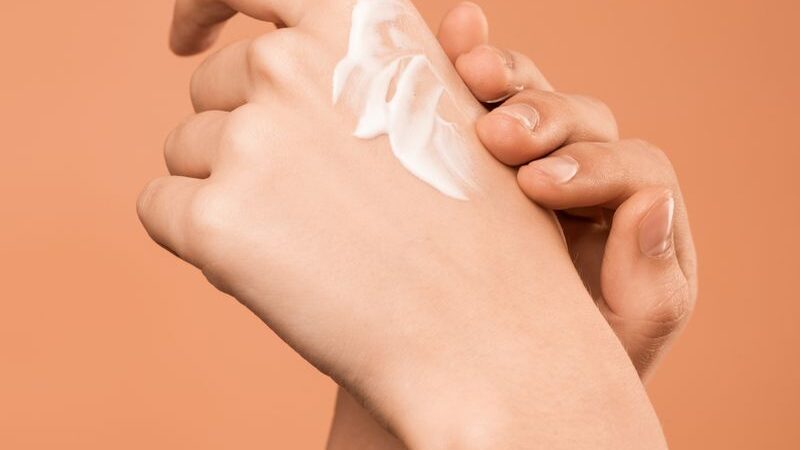
Step Zero, Forever
Before I could pick any products, I needed to know my skin type. Before I could know my skin type, I needed… more quizzes, apparently. I spent years on step zero.
Beginner Skincare Routine Set
A simple starter routine idea: gentle cleanser, moisturizer and daily SPF.
Check priceEvery beginner-focused skincare guide I came across, years before I actually started any kind of routine, said roughly the same thing first: figure out your skin type, then choose products suited to it. This seemed like reasonable, even responsible advice — don’t just buy random things, understand your skin first. So that’s what I tried to do, repeatedly, for a few years, without ever getting past it.
I took online skin type quizzes. More than once, the same quiz gave me different results on different days. Different quizzes from different sites gave me different results from each other — oily, then combination, then “normal with occasional dryness,” depending on which one, and seemingly depending on the day. Every result came with the same instruction: now that you know your type, choose products for it. I never felt like I actually knew, so I never moved past that instruction.
The Comment That Finally Moved Things Forward
What eventually got me unstuck wasn’t a better quiz — it was a comment from a friend, in passing, when I mentioned I was “still trying to figure out my skin type” before starting anything. She said something like: skin type isn’t really a fixed thing you diagnose once and then know forever — it can vary by season, by age, by what you’re currently using (or not using), and the most useful way to find out what your skin needs is usually to use some basic, gentle things for a few weeks and see how it responds, rather than trying to determine the answer in advance.
This reframed the entire thing for me. I’d been treating “skin type” as a prerequisite — a piece of information I needed to acquire before I could responsibly choose anything — when it was apparently more like an observation that emerges from using things, not a fact that exists independently and just needs to be looked up.
What I Actually Changed
The change was starting with products gentle and basic enough that they weren’t likely to cause problems regardless of what my skin type turned out to be — fragrance-free, minimal ingredients, nothing aggressive — and then actually paying attention to how my skin responded over a few weeks. Did it feel tight after cleansing? Did it look shiny by midday? Did the moisturizer feel like too much, or not enough?
Those observations — which took weeks to gather, not a quiz to generate — turned out to be far more useful than any quiz result had been, mostly because they were about how my skin responded to something specific, rather than an abstract category. “This moisturizer feels slightly heavy by the afternoon” is something I can act on directly. “You’re a combination skin type” is something I then have to translate into action, with plenty of room for that translation to go wrong.
The Products That Actually Earned Their Spot
Same format as the rest of this series — chosen specifically because they’re gentle enough to start with regardless of skin type, which was the whole point.
La Roche-Posay Toleriane Hydrating Gentle Cleanser
This was a starting point precisely because it’s formulated to be tolerated broadly — minimal lather, fragrance-free, designed for sensitive skin generally. As a first product, its job wasn’t to be “right for my skin type” in some specific sense; it was to be unlikely to cause a reaction regardless of what my skin type turned out to be, so that anything I noticed afterward was more likely to be informative rather than just irritation from the cleanser itself.
CeraVe AM Facial Moisturizing Lotion SPF 30
I started with this partly for simplicity — moisturizer and sunscreen in one step, which meant fewer things to evaluate at once while I was still in the “just observe” phase. It’s also light enough that if my skin turned out to be on the oilier side, it wasn’t an obviously bad starting point, and if it turned out to be drier, it wasn’t aggressively wrong either — a reasonably central option while I figured out which direction, if any, I needed to adjust.
CeraVe PM Facial Moisturizing Lotion
The evening counterpart — slightly different from the AM version, without SPF, for nighttime. Using a similar product morning and night, with one small difference (SPF vs. no SPF, since I obviously don’t need sun protection while sleeping), meant I wasn’t trying to evaluate two very different products at once. If something felt off, it was easier to guess which one might be responsible when they were this similar to begin with.
What I Actually Learned About My Skin (Eventually)
After a few weeks of the above, a few things became noticeable that no quiz had told me: my skin tends toward oilier by midday specifically around my nose and forehead, but not really my cheeks. It doesn’t react badly to fragrance-free products generally, but I hadn’t tested fragranced ones, so I genuinely don’t know about those. It gets visibly drier in winter in a way it doesn’t in summer.
None of this resolves into a single “skin type” label that I could now confidently state — and I’ve come to think that’s fine, maybe even more accurate than a label would be. “Combination, leaning oilier in the T-zone, more so in summer, currently untested with fragrance” is a lot more specific and useful than “combination,” even though it took weeks of basic products and paying attention to arrive at, rather than a five-minute quiz.
Two Habits I Had to Unlearn
Treating online quizzes as authoritative
Different quizzes gave me different answers, which in hindsight should have been a bigger signal than I treated it as — instead of concluding “these quizzes aren’t very reliable,” I concluded “I must be doing something wrong by not getting a clear answer,” and went looking for a better quiz. The quizzes weren’t the problem and weren’t the solution; they were mostly beside the point.
Treating “I don’t know yet” as a reason not to act
This is really the core of it — not knowing my skin type felt like a legitimate reason to not start anything, as if starting without that knowledge would be reckless. Starting with things gentle enough not to require that knowledge in advance was the thing that actually let me find out, which is roughly the opposite of how I’d been thinking about the order of operations.
What My Routine Actually Looks Like Now
☀️ Mornings
La Roche-Posay Toleriane cleanser, then CeraVe AM Lotion with SPF 30. The same two steps that started this, still doing the job months later.
🌙 Evenings
Same cleanser, then CeraVe PM Lotion. Anything beyond this has come later, based on specific observations — not based on ever settling on a definitive “skin type.”
Questions I Get Asked a Lot
So skin type quizzes are useless?
I wouldn’t go that far — they might be a useful starting conversation for some people. For me, specifically, they became an obstacle because I treated their output as something I needed to resolve before acting, and the conflicting results made that resolution feel impossible. If a quiz gives you a quick general sense and you move on, that’s different from what happened to me.
How long should I “just observe” before choosing products based on what I notice?
For me, a few weeks was enough to notice the patterns I mentioned — oilier T-zone, seasonal dryness. I don’t think there’s a precise number that’s right for everyone, but “long enough to notice a pattern, not just a single day” seems like a reasonable rough guide.
What if the gentle starting products don’t seem to do anything?
For me, “doesn’t seem to do anything dramatic” was actually a fine outcome at the starting stage — the goal wasn’t a dramatic result, it was a baseline that let me notice how my skin behaved without that baseline itself being the source of any reaction.
Is it bad to start with the “wrong” products for your skin type if you don’t know it yet?
Based on my experience, starting with broadly gentle, fragrance-free basics seemed to reduce how much this mattered — they weren’t strongly “for” any particular type, which meant there wasn’t really a wrong choice to make at that stage in the way there might be with something more targeted.
The Actual Takeaway
“Know your skin type first” turned out to be advice that, taken literally, has no real starting point — the knowledge it asks for is generated by the thing it says should come after it. I don’t think the advice is wrong exactly, but I think it’s incomplete in a way that cost me years: starting with something gentle enough not to need that knowledge in advance is how the knowledge actually gets generated, not a workaround for not having it yet.
If “I don’t know my skin type” has been part of why you haven’t started anything, it might be worth considering that the not-knowing isn’t really the obstacle it feels like — it’s closer to the starting condition that basic, gentle products are designed for in the first place.
Featured product pick
Compare price, availability and product details before buying.
Este conteúdo pode conter links de afiliados. Podemos receber comissão por compras qualificadas, sem custo extra para você.